

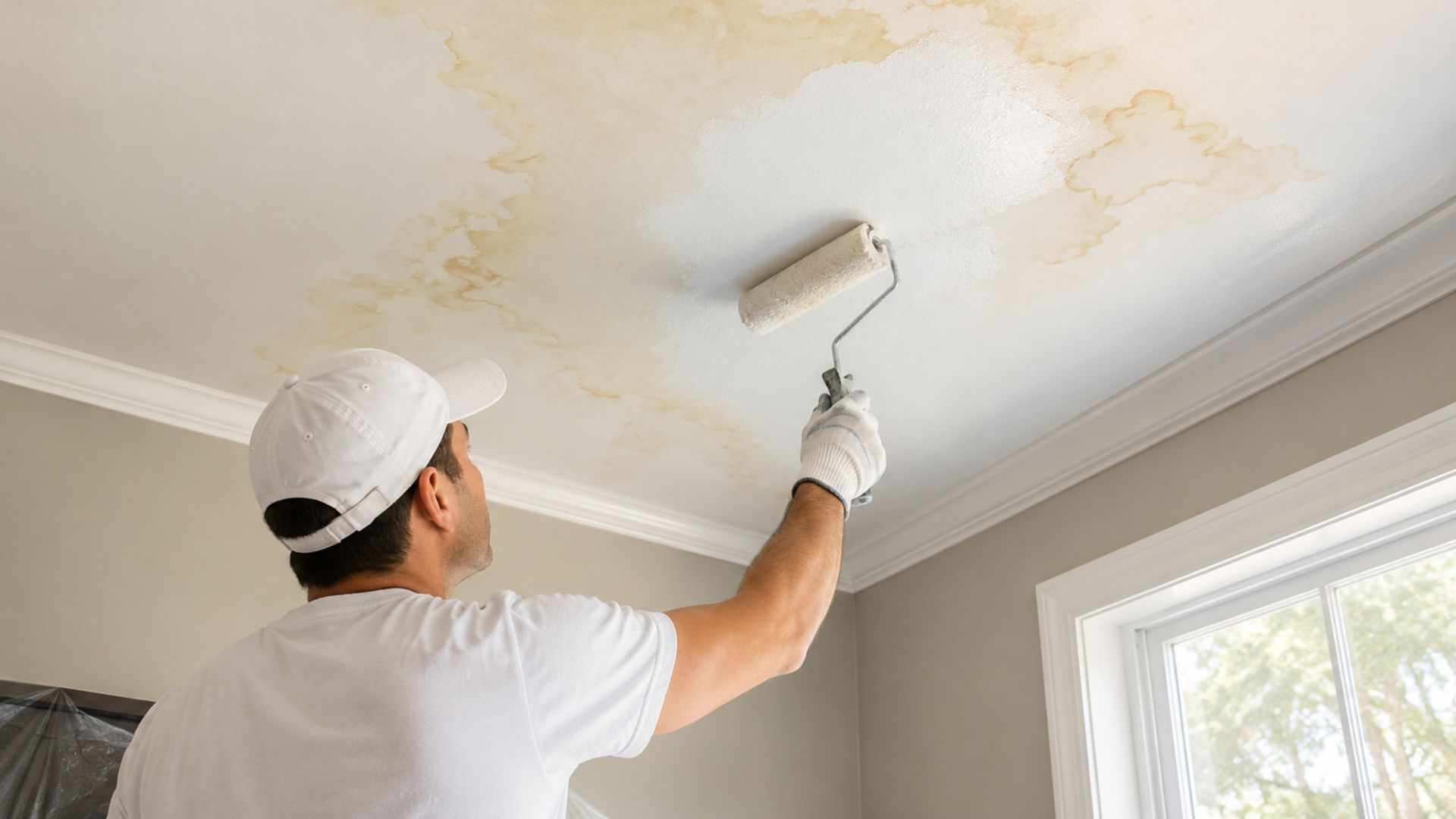
A water stain can make an otherwise clean room look worn or neglected, especially when it appears in the middle of a ceiling or across a visible wall. It may be tempting to cover the discoloration with a fresh coat of paint, but paint alone will not solve the problem.
Water stains usually mean that moisture reached the surface at some point. Before repainting, the source of the water needs to be found, the area must be completely dry, and the wall or ceiling should be checked for damage. Skipping those steps can cause the stain to return, the paint to peel, or the damaged area to worsen over time.
Can You Paint Over Water Stains?
You can paint over a water stain once the moisture problem has been corrected and the surface is dry, clean, and stable. Painting should be the final step in the process, not the first.
Water stains may come from a roof leak, plumbing issue, overflowing fixture, condensation, or water entering around a window. Even when the stain looks dry, moisture may still remain behind the drywall or inside the wall cavity.
The first step is identifying and repairing the source. Depending on the cause, that may require help from a roofer, plumber, or another qualified professional. Once the water issue has been resolved, the affected area can be inspected to determine whether it is ready for primer and paint or whether repairs are needed first.
Texas Professional Painting explains some of the warning signs to look for in its guide to the importance of drywall repair and inspection. Soft spots, sagging drywall, damaged seams, bubbling paint, and recurring discoloration can all suggest that the problem goes beyond the surface.
Why Water Stains Can Show Through New Paint
Regular wall or ceiling paint may cover a stain at first, but the discoloration can eventually bleed through the new finish. A yellow or brown mark may become visible again even after several coats have been applied.
Adding more paint usually does not fix the issue. The stained area needs to be sealed with a stain blocking primer before the finish paint is applied. The primer creates a barrier between the discoloration and the new paint, which helps prevent the stain from returning.
The surface must also be properly prepared. Loose paint, damaged texture, dust, and weakened drywall can prevent the primer from bonding correctly. Any peeling material should be removed, minor repairs should be completed, and the area should be cleaned before priming.
When it comes to painting over water stains on ceiling surfaces, matching the surrounding finish can present another challenge. Ceiling paint often changes slightly in appearance over time. Touching up only the stained area may leave a visible patch, even when the new color is close. In some cases, repainting a larger section or the entire ceiling creates a more consistent finish.
Homeowners dealing with a ceiling stain can also review these tips for painting your ceiling before deciding how much of the surface needs to be repainted.
Check the Surface Before You Paint
Not every water stained wall or ceiling is ready for primer and paint. The condition of the material matters just as much as the stain itself.
Drywall that feels firm, remains flat, and has intact seams may be suitable for painting after it has dried completely. Drywall that feels soft, appears swollen, sags, crumbles, or has damaged seams may need to be removed and replaced.
Bubbling or peeling paint can also mean that moisture has weakened the bond between the existing coating and the surface underneath. Painting over those areas will not create a stable finish. Loose material must be removed, and the surface may need repair before primer is applied.
A musty smell, recurring stain, or visible growth may point to a larger moisture problem. The Environmental Protection Agency recommends correcting the source of the water and drying affected materials before painting. It also advises against painting over moldy surfaces because the paint is likely to peel. Homeowners can review the EPA guidance on mold cleanup in the home for additional information.
A water stain does not always mean the drywall needs to be replaced, but it should not be treated as a cosmetic issue until the area has been inspected.
How to Paint Over a Water Stained Wall or Ceiling
Once the source of the moisture has been repaired and the surface is completely dry, the area can be prepared for painting.
Start by removing any loose or peeling paint. Cracks, damaged texture, and small surface imperfections should be repaired and sanded smooth. The area should then be cleaned so dust and residue do not interfere with the primer.
Apply a stain blocking primer over the full stain, extending slightly beyond the visible edges. Allow the primer to dry according to the product instructions, then inspect the area. A darker stain may require a second coat of primer before the finish paint is applied.
After the stain has been sealed, repaint the area using a finish that matches the surrounding wall or ceiling. When the existing paint has faded or changed over time, repainting a larger section may be the best way to avoid a noticeable patch.
Homeowners researching how to paint over a water stained ceiling should also consider the condition of the surrounding texture and finish. Even when the stain itself is small, matching an older ceiling can be difficult. A professional painter may recommend coating the full ceiling so the final appearance looks consistent from one side of the room to the other.
Before repairs or painting begin, furniture, floors, fixtures, and nearby surfaces should also be protected. Texas Professional Painting’s guide to preparing your home for an interior painting project explains what homeowners can do before the painting crew arrives.
When to Call a Professional
A small, dry stain may be manageable once the source of the water has been fixed. Larger stains, repeated leaks, damaged drywall, textured ceilings, and difficult color matching can make the project more complicated.
Professional help may also be appropriate when the stain is located on a high ceiling, continues to grow, or returns after the area has been painted. These situations may require a closer inspection before any cosmetic work begins.
A professional painting team can evaluate the visible damage, repair the affected surface when appropriate, apply the proper primer, and blend the new paint with the surrounding finish. The original moisture source should still be repaired by the appropriate professional before painting begins.
Restore Your Walls and Ceilings
Painting over water stains can restore the appearance of a room, but the cause of the moisture must be resolved first. Proper inspection, repair, preparation, and primer are what keep the discoloration from returning.
Texas Professional Painting helps homeowners throughout Austin, San Antonio, and surrounding communities prepare and repaint interior walls and ceilings after the underlying moisture issue has been resolved. Contact Texas Professional Painting to request an estimate and discuss the condition of your walls or ceilings.


