

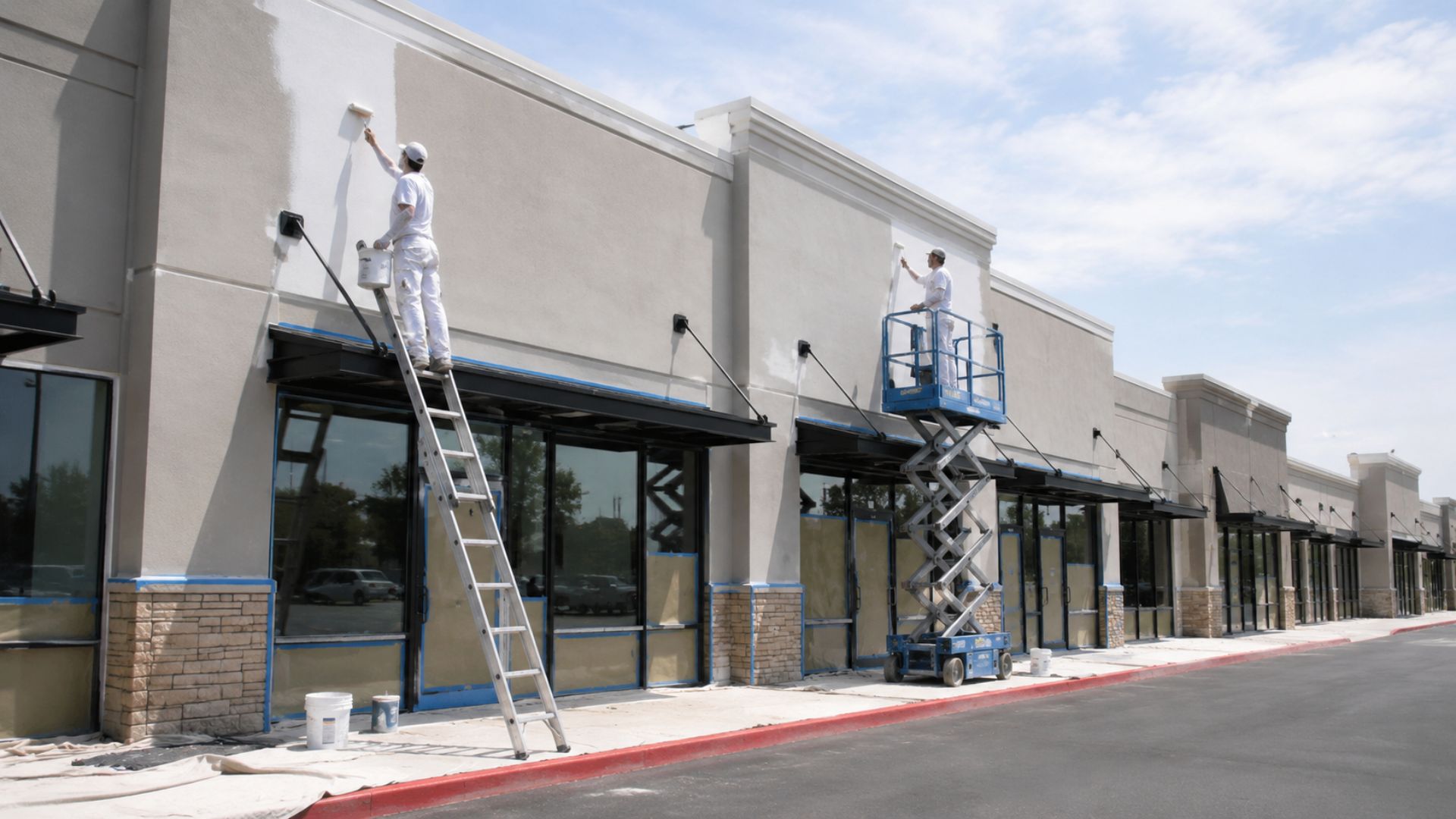
If you’re planning to repaint an office, retail space, warehouse, apartment property, or other commercial building, one of the first questions is usually the same: how much will it cost?
Commercial painting costs can vary significantly from one property to another. Building size matters, but square footage is only one part of the equation. Surface condition, accessibility, preparation, paint products, scheduling requirements, and whether the project involves interior or exterior surfaces can all affect the final estimate.
For Austin businesses and property managers, understanding these factors can make budgeting for a commercial painting project much easier.
What Determines Commercial Painting Cost?
There isn’t one standard price that applies to every commercial property.
A straightforward office repaint may require minimal surface preparation and easy access. A large exterior project could involve damaged surfaces, specialty equipment, multiple coatings, and scheduling around employees, tenants, or customers.
A professional estimate should take the entire scope of work into account before determining a final price.
Size of the Property
Square footage is one of the biggest factors affecting commercial painting cost.
Larger buildings generally require more paint, labor, equipment, and time. However, two properties with similar square footage can still have very different costs.
An open warehouse may be relatively straightforward to paint compared with an office building containing individual rooms, hallways, doors, trim, ceilings, and detailed surfaces.
This is why commercial painting cost per square foot is better used as a general budgeting tool rather than a guaranteed project price.
Surface Condition and Preparation
Professional painting begins well before the first coat of paint is applied.
Depending on the condition of the property, preparation may include:
- Cleaning surfaces
- Scraping or sanding
- Removing loose or peeling paint
- Caulking gaps
- Repairing drywall
- Filling cracks
- Priming repaired or porous areas
A property with surfaces in good condition will generally require less preparation than a building with years of wear, damaged drywall, peeling coatings, or neglected maintenance.
Preparation adds labor to the project, but it also creates a better surface for the new coating to adhere to and can help prevent premature paint failure.
Interior vs. Exterior Commercial Painting
Interior and exterior projects come with different requirements.
Interior painting may include offices, hallways, ceilings, doors, common areas, retail spaces, and other occupied areas. Crews may need to work around furniture, employees, customers, or normal operating hours.
Exterior projects can involve lifts, additional surface preparation, and coatings selected to withstand Austin’s heat, sunlight, rain, and changing weather.
Texas Professional Painting serves businesses and property owners looking for professional painters in Austin for both commercial and residential projects.
Accessibility and Equipment
Not every commercial surface is easy to reach.
High ceilings, multiple stories, difficult exterior elevations, and areas around equipment may require lifts, scaffolding, or additional safety procedures.
These requirements can affect both labor and the amount of time needed to complete the project safely.
Accessibility should be evaluated during the estimating process so the necessary equipment and labor can be accounted for before work begins.
Paint and Coating Selection
The type of paint or coating selected can also influence project cost. Specialty coatings, such as epoxy, elastomeric, and high-performance industrial coatings, are generally more expensive than standard interior or exterior paint because they require more specialized materials and application methods.
High-traffic areas may benefit from more durable coatings that can withstand frequent cleaning and everyday wear. Exterior surfaces require products designed for outdoor exposure, while businesses painting occupied interior spaces may also consider factors such as ventilation and indoor air quality.
The U.S. Environmental Protection Agency provides information about volatile organic compounds in paints and other household products and how they can affect indoor air quality.
The cheapest paint is not always the best option for a commercial environment. Product selection should consider the surface, traffic level, environment, desired appearance, and expected durability.
Scheduling Around Your Business
For commercial properties, the painting schedule can be just as important as the work itself.
Depending on the property, painting may be completed in phases or scheduled during evenings, weekends, or lower-traffic periods.
Businesses should discuss operating hours, restricted areas, employee access, customer traffic, and any areas that cannot be closed before the project begins.
Creating a clear schedule ahead of time can help crews work efficiently while minimizing disruption to day-to-day operations.
Is the Cheapest Commercial Painting Estimate the Best Choice?
Not necessarily.
Two estimates may appear to cover the same property while including very different levels of preparation, materials, labor, and project management.
When comparing commercial painting estimates, consider asking:
- What surface preparation is included?
- What repairs are included?
- How many coats are planned?
- What paint or coating will be used?
- How will surrounding areas be protected?
- How will work be scheduled around business operations?
- Are cleanup and final walkthroughs included?
Looking beyond the total price makes it easier to understand what you’re actually receiving for your investment.
Get a Commercial Painting Estimate in Austin
Online pricing ranges and square-foot estimates can provide a useful starting point, but every commercial property is different.
Texas Professional Painting works with businesses and property owners throughout Austin and surrounding communities. Our team can evaluate the size of your property, condition of the surfaces, preparation requirements, accessibility, and scheduling needs before providing an estimate based on the actual scope of work.
Request a free painting estimate from Texas Professional Painting today.


